
Electronic Health Records (EHRs) are the indispensable foundation of all healthcare operations. While often cumbersome and difficult to use, they are absolutely necessary to meet the complex meaningful use, billing, prior authorization, and interoperability requirements. Nearly every healthcare action is executed through an EHR.
Every practice, hospital, and provider is now completely dependent on their EHR for all clinical and administrative functions. The software was initially designed to allow providers to create complex medical notes quickly, relying on a system of:
- Rigid templates
- Quick text
- Dropdowns
- Checkboxes
This structured patient data was essential for billing and regulatory compliance, but it led to increasingly complex and often clunky interfaces.
Today, as artificial intelligence rapidly reshapes healthcare, the need for these rigid, interface-heavy documentation methods is disappearing entirely. This forces EHR companies to face a moment of reckoning—and many are not prepared. They must now navigate the impossible task of:
- Maintaining their massive, complex legacy systems for an extensive, dependent user base.
- Simultaneously attempting to integrate and deploy powerful new AI-powered features.
The Core Problem: Crippling Technical Debt
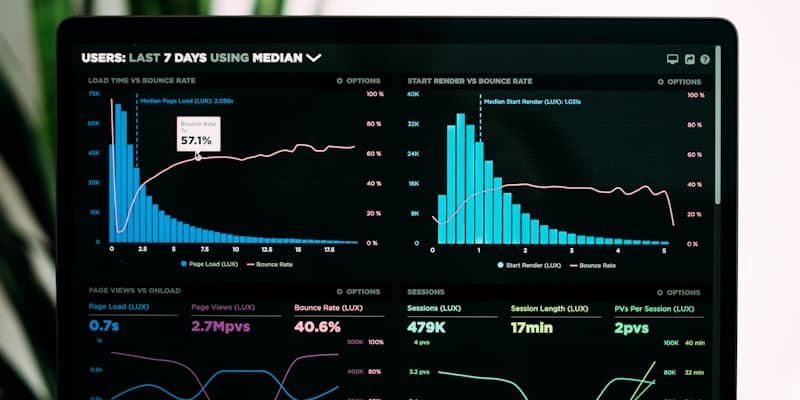
Many EHR companies are not prepared for this transition and will not be able to successfully implement the tools their user base will come to expect. The core problem is technical debt.
Technical debt occurs when software shortcuts are taken during development to meet immediate needs, often at the expense of long-term extensibility. Like financial debt, it compounds over time. Before you can build something new, you must first "pay down" the old debt by refactoring the shortcut that was initially taken. EHR companies, over decades, have accumulated enormous technical debt while layering feature upon feature to satisfy:
- Documentation requirements
- Coding rules
- Regulatory mandates
- Enterprise-level customizations
The result is massively complex software that supports tens of thousands of users performing mission-critical work—work that demands 99.9% uptime. Any change risks catastrophic consequences. In this environment, innovation becomes paralyzing. Even adding basic AI features can require months or years of refactoring fragile legacy systems.
The High Cost of Legacy Maintenance
To keep these complex systems running, EHR companies employ large teams of highly specialized developers, each commanding six-figure salaries. This immense expense is passed directly to clinicians and healthcare organizations. That's why:
- Every additional interface, module, or "premium" feature comes at an additional cost.
- EHR bills seem to increase year after year despite little noticeable improvement.
In contrast, modern AI scribe solutions like Grail offer transparent, predictable pricing without hidden fees or escalating costs.
The Promise of AI in Healthcare
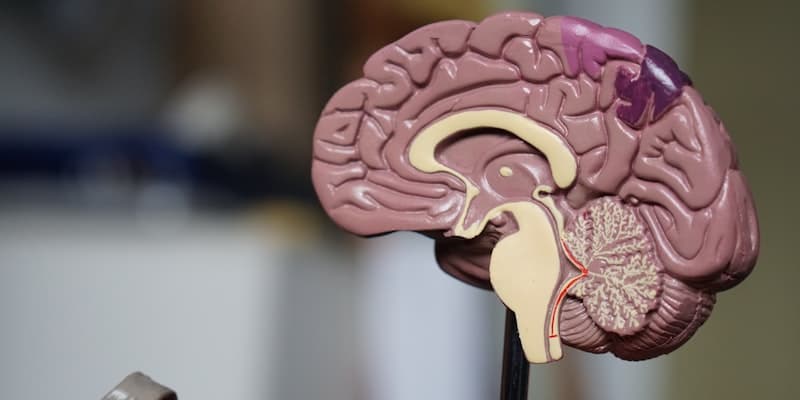
Yet, the irony is that the future of technology in healthcare is incredibly bright. The promises of true system interoperability and universal data sharing that have often been discussed but never meaningfully implemented may eventually be realized.
AI is uniquely positioned to transform healthcare documentation and workflows. AI scribe technology and ambient clinical intelligence are already proving their value. Properly leveraged, AI EMR integration can:
- Reduce the burden of documentation that is one of the primary causes of provider burnout
- Reduce employee workload
- Streamline prior authorizations
- Replace rigid forms, reminders, and phone calls with natural, conversational AI-powered workflows
- Give patients greater access and ability to understand their healthcare and medical records
An AI medical scribe can produce documentation that is more detailed, more accurate, and more clinically useful than what even the most diligent human note writers can achieve. Ambient AI scribes that listen to patient encounters and automatically generate notes are transforming how providers document care.
The Bridge: EHR Add-on Solutions
Getting from today's semi-paralyzed state to that future won't be immediate.

In the gap, we will see an explosion of EHR add-on solutions—tools that leverage existing EHR capabilities, APIs, and interoperability layers to deliver AI scribe EHR integration now, without requiring core EHR rewrites. These ambient scribe solutions act as bridges, augmenting legacy EMR systems rather than replacing them.
This is where AI scribe software like what we're creating at Grail Digital Health comes in. Rather than simply transcribing visits, modern ambient AI scribe solutions with EMR integration:
- Reach deep into the EHR
- Generate patient summaries
- Provide contextual awareness
- Enable AI to produce rich, accurate clinical documentation that integrates seamlessly into existing workflows
These tools offer the provider a seamless way to interface with the giant data store that is linked to each patient.
Unlocking True Interoperability
AI will also finally unlock true interoperability. One of AI's core competencies is transforming data from one format to another. By transforming data into universal formats, it will build upon already impressive technologies like HIEs, Carequality, CommonWell, and related platforms—allowing EHRs to communicate seamlessly in ways that were previously promised but never fully realized.
EHRs are evolving, and the companies that will survive this transition will be the ones that have either:
- Managed their technical debt well from the beginning.
- Confront their technical debt head-on and creatively work around it while embracing AI as a foundational technology, not an afterthought.
Ultimately, the technical debt of legacy EHR systems restricts innovation and will slow direct AI EMR integration into their software. Until that debt is managed, AI scribe EHR add-on solutions are critical, providing an essential bridge that gives providers and healthcare organizations immediate access to the power of ambient AI clinical documentation.